
A Complete Physics Lab Equipment List and Their Uses
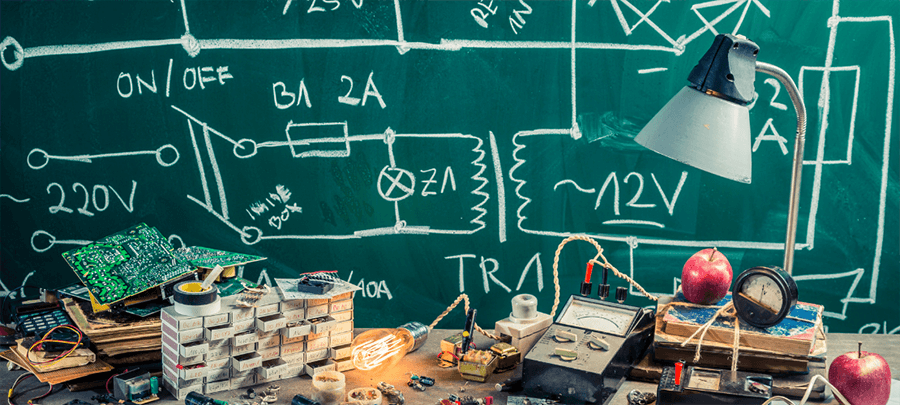
Everything you need to understand a physics laboratory.
The physics lab is where we investigate nature’s micro
and macro components. Physics laboratory apparatus makes
this journey possible by providing accurate and reliable
tools for experimentation.
From schools and colleges to research laboratories,
the right equipment helps students and researchers
explore mechanics, optics, electricity, magnetism,
measurement and other areas of physics.
Measurement Equipment
Optics & Light
Mechanics
Electrical Experiments
The science behind every experiment.
Physics investigates matter, energy, forces and their
interactions. Laboratory equipment turns these principles
into measurable, practical experiments.
What is Physics?
Physics is the discipline of science that investigates
the structure of matter and how it interacts with other
matter in the universe.
It studies matter’s behaviour and explores nuclear,
gravitational and electromagnetic forces.
Physics also explains how matter interacts with its
environment in both space and time.
Importance of Physics
Physics principles contribute to the development of
contemporary technologies and are referenced across
disciplines including mathematics and philosophy.
Developments in solid-state physics, nuclear physics
and electromagnetism have contributed to technologies
including computers, televisions and everyday
appliances.
The core instruments of a physics laboratory.
A well-equipped physics laboratory combines instruments
for measurement, optics, mechanics, magnetism and
electrical experimentation.
Optics
Lenses, prisms and optical benches for light experiments.
Measurement
Vernier callipers, screw gauges and measuring instruments.
Mechanics
Pendulums, pulleys, springs and mechanical apparatus.
Electricity
Multimeters, ammeters, voltmeters and electrical equipment.
Magnetism
Magnets and apparatus used for studying magnetic effects.
Sound
Sonometers and apparatus for studying vibrations and frequency.
Mass Measurement
Balances and precision instruments for mass measurement.
Demonstration
Models and apparatus designed for classroom demonstrations.
Physics lab equipment & their uses.
Explore some of the commonly used instruments and understand
what each piece of equipment is designed to do.

Optical Bench
This physics laboratory device is used for observing
and measuring optical phenomena. It allows light
sources and optical devices to be positioned and
adjusted appropriately during experiments.
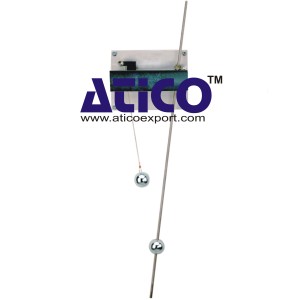
Pendulum
A pendulum consists of a body suspended from a fixed
point. It is used to demonstrate oscillation and
movement and is also found in devices such as clocks,
seismometers and metronomes.
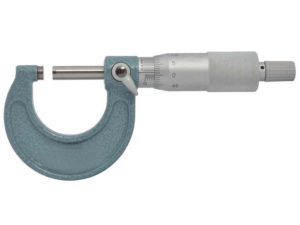
Screw Gauge
A screw gauge is a precision measuring instrument
used for measuring small dimensions. It is commonly
used to measure objects such as bolts, cables,
screws and other small components.

Multimeter
A multimeter is used to measure voltage, current and
resistance. It is commonly used for electrical testing
and laboratory experiments.

Vernier Calliper
A vernier calliper is a measuring tool used to determine
the width of rods and the thickness of various objects.
It provides accurate measurements for laboratory
experiments and practical work.

Daniell Cell
A Daniell cell is a primary voltaic cell with a copper
anode and zinc-amalgam cathode. It is used in experiments
involving the production of electricity.

Voltmeter
A voltmeter is used to measure electrical potential
between two points in an electric circuit. Both
analog and digital voltmeters are available.
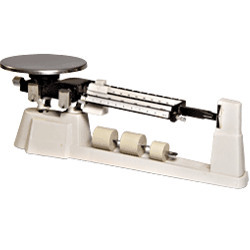
Triple Beam Balance
A triple beam balance is a precision mass measuring
instrument. It can directly measure an object’s mass
and can also be used for determining mass by difference
for liquids.
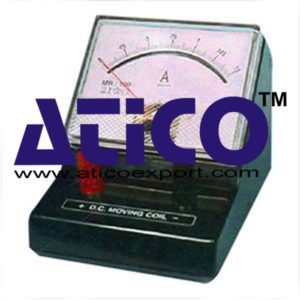
Ammeter
An ammeter is used to measure electric current in a
circuit. It can be used for measuring both DC and AC
current, with current expressed in amperes.

Digital Balance
A digital balance is used in physics laboratories
to obtain accurate measurements of the mass or weight
of an object during practical experiments.

Sonometer
A sonometer is used to demonstrate the relationship
between frequency and the sound produced by a vibrating
string. It is a traditional instrument for examining
string vibrations.

Digital pH Meter
Digital pH meters are used to measure acidity or
alkalinity levels in solutions. They provide convenient
and efficient pH analysis for laboratory applications.
Equipment at a glance.
A quick overview of commonly used physics laboratory
equipment and their primary applications.
| Equipment | Primary Use | Category |
|---|---|---|
| Optical Bench | Optical observation and measurement | Optics |
| Pendulum | Oscillation and movement experiments | Mechanics |
| Screw Gauge | Precision measurement of small dimensions | Measurement |
| Multimeter | Voltage, current and resistance | Electrical |
| Vernier Calliper | Width and thickness measurement | Measurement |
| Daniell Cell | Electricity experiments | Electricity |
| Voltmeter | Electrical potential measurement | Electrical |
| Ammeter | AC and DC current measurement | Electrical |
| Sonometer | String vibration and frequency | Sound |
Build a physics laboratory designed for practical learning.
Schools and educational institutions need dependable
laboratory equipment that supports practical learning,
demonstrations and experiments across different areas
of physics.
Need equipment for your laboratory?
Atico Export provides school laboratory equipment,
scientific research lab equipment and physics laboratory
equipment. Complete laboratory setup support is also
available for educational institutes.
Have a physics lab equipment requirement?
Share your equipment list with our team. Whether you are
sourcing individual instruments or planning a complete
educational laboratory, send us your requirement and our
team can help you with the next step.