
Laws of Thermodynamics
Laws of Thermodynamics
Thermodynamics is related to science which narrates the relations between heat and mechanical work. It is the branch of Physics which is based on four laws. It exchanges the various forms of energy. Thermodynamics system includes various products like Heat Conduction Apparatus, Air Humidity Measurement Trainer and Heat Conduction Apparatus etc. All the systems work based on four laws. We have described here under the entire four laws.
Four Laws of Thermodynamics:
- Zeroth law of thermodynamics
- First law of thermodynamics
- Second law of thermodynamics
- Third law of thermodynamics
Zeroth law of thermodynamics: According to this law if two systems named as A and B is in equilibrium with the third system named as C then A and C are also in thermal equilibrium.
First Law of thermodynamics:
We can explain this law in various ways.
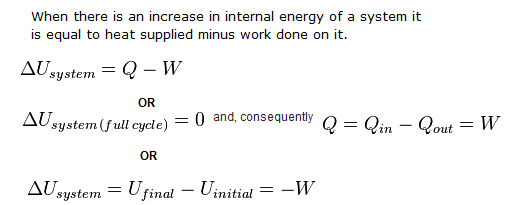
Second Law:
Second law concludes that the total sum of all the entropies is enhanced in every natural thermodynamic process that means if there will be same temperature then no work will be done.
Third Law:
This law states that the entropy of a crystal will be zero when the temperature of the crystal is absolute zero. Entropy is related to purity which is at zero. Third law supports the use of first two laws. It is used in Ultra-low temperature chemistry and physics. It refers to the stat of “absolute zero”.
These were the four laws of thermodynamics in which it works.
Fluid Mechanics Lab Equipment Manufacturer & Suppliers
Advanced Technocracy (Atico Export) is the leading manufacturer of Fluid Mechanics Lab Equipment using latest technology. We offer the superior quality as well as reliability of fluid mechanics products so that we have a huge number of customers which is incomparable with other companies. Our innovative products are used worldwide. Here we have provided the full description of Fluid Mechanics Lab Equipment.
What is Fluid and Mechanics?
We all know that common states of matter consist of solid, liquid, and gas. Fluid can be liquid or gas so Fluid Mechanics is the branch of science which deals with the behavior of the fluids (Liquids or gases) at rest as well as in motion. That’s why this branch considers with the statics, kinematics and dynamics aspects of fluids.
Branches of Fluid Mechanics?
There are two branches of it which are mentioned below:
- Fluid Statistics or hydrostatics
- Fluid Dynamics
1. Fluid Statistics or hydrostatics:
The rest study of fluids is called as fluid statics. Fluid in motions, where pressure forces are not considered that is called as fluid kinematics.
2. Fluid Dynamics:
When the pressure does force at the time of fluid in motion that part of science is called fluid dynamics.
These types of equipments are not easy to manufacture so we have made it in such a way that user can use it very easily.
Actually we do not focus only on the quality we also made the equipments by considering its accuracy, result orientation and low cost also.
Why Atico Export for Fluid Mechanics Lab Equipment Manufacturer?
- Our best quality of equipment gives our good image which gives the confidence of trust in Atico Export for international Client.
- Compatible to use the Fluid Mechanics Lab Equipment by users along with 100% accuracy result.
- Best and fast service after placing the order. We always try to deliver the material on our commitment time, which gives the satisfaction to customer.
- We believe to provide services and support till the commitment time periods.
- Surety of 100% guarantees and warranty as per condition before purchasing according to equipments.
- Best rates which are reliable for customers that removes their burden.
- Transparency in our manufacturing unit gives the 100% surety and satisfaction in international clients.
- Quick response in customer queries whether the order is big or small. We never do partiality with our clients.
Laboratory accidents and first aid treatment for injuries
If you are working in a laboratory then you must aware of the first aid treatment in case of any major or minor incidents. Minor issues can be a major problem for future in case of any carelessness; so always work in the laboratory to keep essential safety instruments handy.
You must be well trained for any chemical reaction or other experiments and must have knowledge about all lab safety rules. Be responsible while working in lab.
We are describing here some Laboratory accidents and first aid treatment for injuries.
Medical Accidents:
Major
- Keep calm.
- Initiate lifesaving measures if required.
- Do not move person unless there is danger of further harm.
- Call for emergency response.
Minor:
- Do first aid.
- Call somebody for help.
In case of Fire:
Major
- Move to the vacate place.
- Trigger the alarm near to your place.
- Close the door to constrain the fire.
- Do not use lift to come out from the accidental area.
- Contact immediately to the emergency personnel.
Minor:
- Alert the other people present in the lab.
- Use the appropriate fire extinguisher and firstly apply it at the base of fire.
- Try to move from smoke or fumes.
In case of Chemical spill:
Before doing the experiment for any chemical reaction you must aware about the four important facts of matter which are mentioned below:
- Reactivity to air or water
- High toxicity
- Corrosion
- Flammability
- If spilled Chemical is burnable then turn off all kind of heat generated sources.
- Call for knowledgeable personnel.
- Close doors to stay away from fire.
- Always note down the response from chemical reaction whether it spills or not. All lab workers must be updated with the response of a particular reaction.
- Do not forget to keep all safety equipments and spill clean-up materials.
- Also ensure that the person involving spill reaction must be experienced. Do not allow untrained personnel to work in lab.
For Biological spill accidents:
- For Biological spills emergency lab workers should have the following safety equipments.
- Disinfectant solution
- Forceps, tongs, broom, dust pan
- Personal protective equipment (PPE): safety glasses, goggles, or face shield, utility gloves, wrap-around lab coat, shoe covers (optional)
- ‘Biohazard’ bag, sharps container
- Paper towels or other absorbent.
- Clean the spill area with a fresh cloth that can soak it well.
- Keep calm and stay away immediately from the affected area.
Radioactive spill emergency:
- Allow to work in the lab to only those persons who are well trained.
- Contact to the personnel who are aware to handle to the affected area.
- Contact to the radioactive spill emergency.
- Close doors to prevent from being affected.
What to do for Clothing on fire:
- Use the safety shower immediately on the infected part of body.
- Roll the individuals on flame.
- Call to the doctor or other supervisor who is expert to treat.
- Rinse exposed area thoroughly with water.
- Use deluge shower for 15 minutes.
- Wash the infected part from heat and chemicals continuously 15 minutes.
- In case of affected large area remove clothing.
Hazardous material splashed in eye
- You have to rinse eyeball immediately and inner surface of eyelid with water.
- Do this process for 15 minutes continuously.
- Don’t scrub your eyes.
- Report all incidents to the expert or supervisor.
Some other important lab safety rules:
- Do not work alone in the lab always do in the presence of lab assistant or teacher.
- If you have any doubt or lack of knowledge about any reaction or experiment then take instructions from your teacher or their expert person.
- If you are entering first time in the lab then do to touch any chemical or instrument without permission.
- Never eat any junk food, drink or other food.
- Follow all the safety rules which your teacher or assistant told you.
- While any chemical reaction keep handy away from eyes, mouth or other part of the body.
- Always wear the safety gloves and lab coat before start the working.
- Googles, gloves, lab coat and shoes are essential to wear.
- Inform the teacher or other trainer for any incident or injury and keep calm.
- Do not taste, or smell any chemicals.
So guys we hope that the points mentioned above will help you a lot. For any other information regarding various equipments you may contact us through email sales@aticoexport.com.
Most Searched on Atico Export – Physics Lab Equipment | Chemistry Lab Instruments | Civil Lab Instruments| Mechanical Lab Equipment | Engineering Lab Equipment | Fluid Mechanics Lab Equipment | Biology Lab Equipments | Science Lab Equipment
How to use lab equipments safely
For the persons who work in a lab whether it is Chemistry/ physics or biology, It becomes essential for the guys to be aware about the safe use of various equipments. If we are using the instruments without caring about the proper use then it can be a cause of a major accident.
Negligence while using an instrument can be the activity ‘oh-no!’ so proper care and precautions can be an activity of ‘oh yeah’. Lab safety is an important task you must do before going for any experiment.
Our inattentiveness for working in a laboratory definitely call the trouble so guys don’t forget to take the requisite training for using the laboratory instruments and also follow the precautions as furnished here under:
Furnaces and ovens:
Furnaces are used to access the temperature of 1000 degrees Celsius and you will be surprised to know that there is no locking system when the device will be high temperature. So it needs more care to use it as mentioned below:
- Wear the gloves and stand to one side of the furnace as the door is opened.
- Also use the lab coat and safety glasses.
- Use the tong to load or unload the furnace.
- Don’t left the devices over night. However oven is less destructive but it can also create a problem.
- Do not test Furnaces and ovens with your finger firstly wear the gloves then touch the thing to remove or other process.
Centrifuges:
If you are using centrifuges first time then it becomes necessary to get adequate training before start to use. Irresponsibility while using it can cause an unattainable breakage.
- It is quite necessary to fit the device into a locking system. To try to by-pass the lock when moving is a stupid and illegal activity.
- Firstly balance the rotor before start to use the centrifuge.
- Imbalance can crack the rotor.
- Centrifuge tubes are used to access the required certain speed. So do not take the tubes at the high speed which is higher than the stated specifications.
- It is essential to keep clean the centrifuge. Buckets and holders must be cleaned immediately after use.
Microwave digestion system:
- Adequate training is essential to use Microwave digestion system
- You have to add chemicals to the vessels in the fume cupboard.
- Check the vessels are dry if not them remember vessel must be dry and free from particular matter otherwise it will absorb the energy of microwave.
- Do not heat the liquid in sealed vessels.
- If you don’t know about organic content and composition of the sample then do not try to digest the samples larger than 0.5 gms.
- Do not warm high boiling point acids which are conc. Sulfuric or phosphoric into the digestion vessel.
So guys these were the general guidelines before using some equipments. Use only those equipments to which you are familiar and aware about the chemical risks.
Some other points to keep in mind:
- Always wear the gloves before any kind of lab activity.
- Tie back the long hair o prevent any accident.
- Wash your hand before and after using the lab.
- Avoid to attend the phone calls while working in laboratory.
- Keep clean your working areas from any chemicals.
Chemical Reaction Engineering Lab
In Chemical Reaction Engineering Lab (Also called reaction engineering or reactor engineering), are used different types of reactor for solids dissolution, product mixing, chemical reactions, batch distillation, crystallization, liquid/liquid extraction and polymerization in process industries and for experiment purpose in chemical reaction engineering laboratories.
Equipment List
-
Continuously Stirred Tank Reactors
- In an ideal CSTR the contents in reactor are well mixed and have uniform composition throughout. Thus the exit stream has the same, composition as the fluid within the reactor. read more
-
Plug Flow Reactor
-
Isothermal Batch Reactor
- batch reactor is a closed system with no input and output streams. A batch reactor can operate under conditions like Isothermal (Temperature of Reaction remains constant), perfectly mixed (composition of reaction mixture is uniform throughout), and constant volume read more
-
Isothermal Semi-Batch Reactor
- An isothermal semi-batch reactor is a semi-closed system with one input stream. It is operated under conditions like Isothermal (Temperature of Reaction remains constant) and perfectly mixed (composition of reaction mixture is uniform throughout). read more
-
Adiabatic Batch Reactor
- An adiabatic batch reactor is a closed system with no input and output streams. This reactor is operated under conditions like adiabatic (Temperature of Reaction Mass keep on changing), perfectly mixed (composition of reaction mixture is uniform throughout), and constant volume read more
-
Packed Bed Reactor
- The setup consists of a glass column packed with Rasching Rings and two feed tanks. Reactants are fed to the reactor through liquid distributor, fitted at the bottom of the column. Rota meters are provided to measure the individual flow of Chemicals. read more
-
Kinetics Of Dissolution Of Benzoic Acid
- The setup consists of a Reactor in which solid cylinder of Benzoic Acid is placed and water is stirred by means of a variable speed mixer. Baffles are also provided. The Reactor is made of Stainless Steel. read more
-
RTD Studies in CSTR
- Real reactors do not satisfy the idealized flow patterns, back mix flow or plug flow deviation from ideality can be due to channeling of fluid through the vessel, recycling of fluid within the vessel or due to the presence of stagnant region or pockets of fluid in the vessel. read more
-
RTD Studies in Plug Flow Reactor
- Real reactors do not satisfy the idealized flow patterns, back mix flow or plug flow deviation from ideality can be due to channeling of fluid through the vessel, recycling of fluid within the vessel or due to the presence of stagnant region or pockets of fluid in the vessel. read more
-
RTD Studies in Packed Bed
- The setup consists of a glass column packed with Rasching Rings. Liquid is fed to the reactor through liquid distributor, fitted at the bottom of the column. Rota meter is provided to measure the flow. The flow rate can be adjusted by operating the needle valve provided on Rota meter. read more
-
Emulsion Polymerization Reactor
- The set-up consists of jacketed type SS reactor fitted with a variable speed agitator & baffles. Hot water from a digitally controlled water bath is circulated in the jacket using a pump. read more
-
Condensation Polymerization Reactor
- Condensation Polymerization kettle is used to carry out a condensation polymerization reaction under batch condition. Polymerization reaction can be acid catalyzed or self-catalyzed. The set-up can be used to measure the extent of reaction &.also the reaction rate constant. read more
-
Hydrodynamics of Trickle Bed
- Tile set-up consists of a glass column. Arrangement is made for changing the glass column conveniently and filling it with any type of packing required. Air from a regulated pressure vessel passes through a sparger and allowed to enter in the column at the top. read more
-
Combined Flow Reactor
- In a Combined Flow Reactor, the contents are passed through two types of Reactors PFR and CSTR, connected in series. This set-up is used to study a non-catalytic homogeneous second order liquid phase reaction under ambient condition. read more
-
RTD Studies in Plug Flow Reactor
- In an ideal Plug Flow Reactor {PFTP} there is no mixing in the direction of flow and complete mixing perpendicular to direction of flow. Concentration of reactants varies along the length of reactor but not in radial direction. read more
-
UV Photo Reactor
Parts of Microscope
Biological Laboratory microscopes are essentials for any veterinary clinic, medical clinic, hospitals or students working a research and for a good best results, high build quality of parts of microscope are most important to look for when you go shopping for microscopes.
ATICOTM Microscopes are well known for their quality and durability. We provide all types of microscope as well as parts of microscope to extend the features.
Microscopes Parts we provide
- Eyepieces
- Objectives lens
- Led Lamp
- Halogen Bulb
1. Microscope Eyepiece
We have following types of microscope eyepiece available.
- Huygenian Eyepieces
- Wide Field Eyepieces
- Pointer/Micrometer Eyepieces
2. Objectives lens
We provide two types of objective lens for microscopes.
- Series A: which is corrected for a rear conjugate at 187 mm and 160 mm.
- Series B: Which is designed with the rear conjugate at infinity.
Both of our objective lens series are anti-reflection coated with MgF2.
3. Microscope LED Light
Our LED light lamps for microscope are designed for to be an excellent companion to various types of microscopes by ATICOTM. Our Microscope LED Lights offer a great amount of light for microscope when addition light source is required or there is no light at all. These LED light can also be used with Microscope Cameras.
4. Microscope Halogen Bulbs
Our Microscope Halogen Bulbs are used primarily in medical and research microscopes, and optionally on student scopes. ATICOTM Halogen lamps provide white light and the life span of halogen bulbs are very long. Our microscope are fitted with a dimmer, which decreases the heat as well.
Optical Fiber Fusion Splicing And Its Applications
What is optical fiber fusion splicing?
Optical fiber fusion splicing is a welded joint formed between two optical fibers. Fusion splicing is a permanent, low-loss, high-strength joint compared with other temporary joint such as a mechanical splice. Optical fiber fusion splices play a crucial role in the optical network.
The Ideal Fusion Splicing Process
The goal of fiber fusion splicing is to create a joint with minimum insertion loss yet with mechanical strength and long-term reliability that matches the fiber itself.
The ideal process of fusion splicing should be fast, inexpensive and should not require expensive equipment. But in reality the fusion splicing process needs trade-offs among different applications and requirements. For example, for undersea telecommunications, long-term reliability is the most important goal for a fusion splicing.
The Advantages of Optical Fiber Fusion Splicing
There are other approaches for interconnecting fibers such as fiber optic connectors and mechanical splicings. Compared to these two, fusion splicing has many advantages as explained below.
- Fusion splicing is very compact
- Fusion splicing has the lowest insertion loss
- Fusion splicing has the lowest back reflection (optical return loss ORL)
- Fusion splicing has the highest mechanical strength
- Fusion splicing is permanent
- Fusion splicing can withstand extreme high temperature changes
- Fusion splicing prevents dust and other contaminants from entering the optical path
Types of Fusion Splicing
Fusion splicing environment and applications can be roughly divided into three types: 1. Field splicing 2. Factory splicing and 3. Laboratory splicing.
An important example of field splicing is the assembly of undersea fiber cables aboard fiber deployment ships. The example of factory splicing could be the assembly of fiber optic passive devices such as a WDM. An example of laboratory splicing is done by researchers fusion splicing the newest developed fibers to test their compatibility with existing industry standard fibers.
Fiber fusion splicing involves concepts from many subjects including optical waveguide theory, heat transfer, material science, mechanical engineering, fluid mechanics and more.
Introduction to the Fusion Splicing Process
The major steps involved in optical fiber fusion splicing can be summarized as the following.
1. Optical fiber stripping
The fiber cable jacket is removed and then the fiber polymer coating is stripped with fiber optic strippers.
2. Fiber cleaving
The fiber is cleaved with specialized tool called fiber cleaver. Two types of fiber cleaver exist: high precision fiber cleaver for single mode applications and field cleaver for multimode applications. A mirror like almost perfect end face is achieved by this cleaving process.
3. Fiber alignment
The fibers are laterally aligned to each other by step motor in a fusion splicer. This may involve rotating the fibers in polarization maintaining fiber splicings.
4. Fiber welding
The fibers are then heated with electric arc or other methods to the fiber glass’s softening point and then both fibers are pressed together to form a solid joint.
5. Insertion loss estimation
The insertion loss is estimated based on the fusion quality and dimensions.
6. Pull tension strength testing
The fusion is pull proof tested when opening the fusion splicer cover.
7. Splice protection with fusion splice sleeve
The fusion splice joint is then protected with a heat shrink tube with a steel strength member inside to form a solid and reliable fiber joint.
High Quality Food Processing Lab Equipment
Food processing industry is one of the major sectors which help in enhancing the revenues of any economy, be it a developed nation or a developing one. Various technological and strategic developments have taken place which assisted in commercialization of agriculture and food production. The produced food needs to be processed, preserved and packed in the best possible way, ensuring that its quality is preserved intact.
The sudden development of food processing industry has paved way for many job opportunities for nearly half of the population in several departments. In developed and urban areas, majority of the people used packed food products. High quality laboratory equipment for food processing help the entrepreneurs in providing quality food products to the consumers.
In most of the countries across the world, agricultural sector is still a major source of economic revenue. There is no point in simply concentrating on technological development alone without giving due importance to other sectors. Agricultural and food industry is an inevitable domain which really is the source of livelihood as well as the source of food for the present and future generations. Hence, the demand and role of high quality food processing lab equipment is significant and very evident.
There should be ample opportunities for research and development in food processing sector as well as in developing world-class laboratory equipment that assist in food processing. Considering the multi-dimensional face of food processing industry, there should be experienced scientists and researchers for developing innovative laboratory equipment for food processing. On the whole, it can be categorized as processing machinery and equipment, packaging machinery and equipment as well as other miscellaneous utility equipment which assist in the final stages of marketing the end product to the consumers.
In India, there are only a few manufactures that are capable of producing state-of-the-art facilities and laboratory equipment which facilitate food processing. The use of world-class equipment also helps in retaining the nutritional content as well as the quality in a much safer way.
The food processed using laboratory equipment is safe and hygienic which helps in preventing food-borne diseases. Most of the packed and canned food products that we use on a daily basis go under different laboratory equipment for food processing like moisture meter, dehumidifier, peelers, shredders, shakers etc. The use of such equipment ensures that the packed food has the right amount of essential nutrients and other regulators and enzymes which are essential to preserve them for having the stipulated shelf life. This creates trust and reliability among the consumers so that the market value and demand for such good products sees a constant increase.